Chiang Rai Itinerary: How We Spent 1.5 Days + All the Things to Do
Chiang Rai is a great destination in northern Thailand, known for its striking temples, relaxed atmosphere, delicious local food and beautiful countryside. We spent around 1.5 days exploring the city before taking the bus to Chiang Mai, which gave us enough time to see some of the most famous highlights.
In this guide, we share our 1.5-day Chiang Rai itinerary, where we stayed, how to get around, and all the things to do if you have longer to explore.
How We Spent 1.5 Days in Chiang Rai
Day 1: Blue Temple, Wat Huay Pla Kang and the Night Bazaar
Arrive in Chiang Rai and check in
We flew directly from Bangkok to Chiang Rai and early afternoon. After checking into our accommodation, we headed out to explore the city and stopped by lunch right next to The Blue Temple, in a small local spot, super affordable.
We stayed at Parawee Boutique Hotel, a 3 star budget-friendly option that was clean, served a lovely breakfast and was conveniently located near the Blue Temple.
Visit the Blue Temple (Wat Rong Suea Ten)
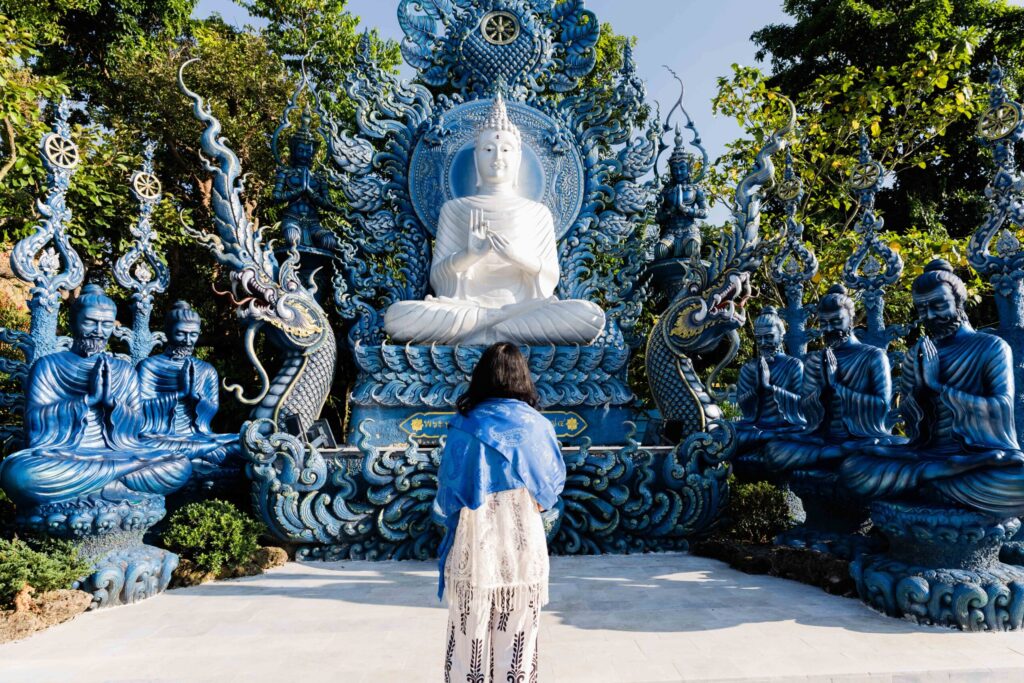
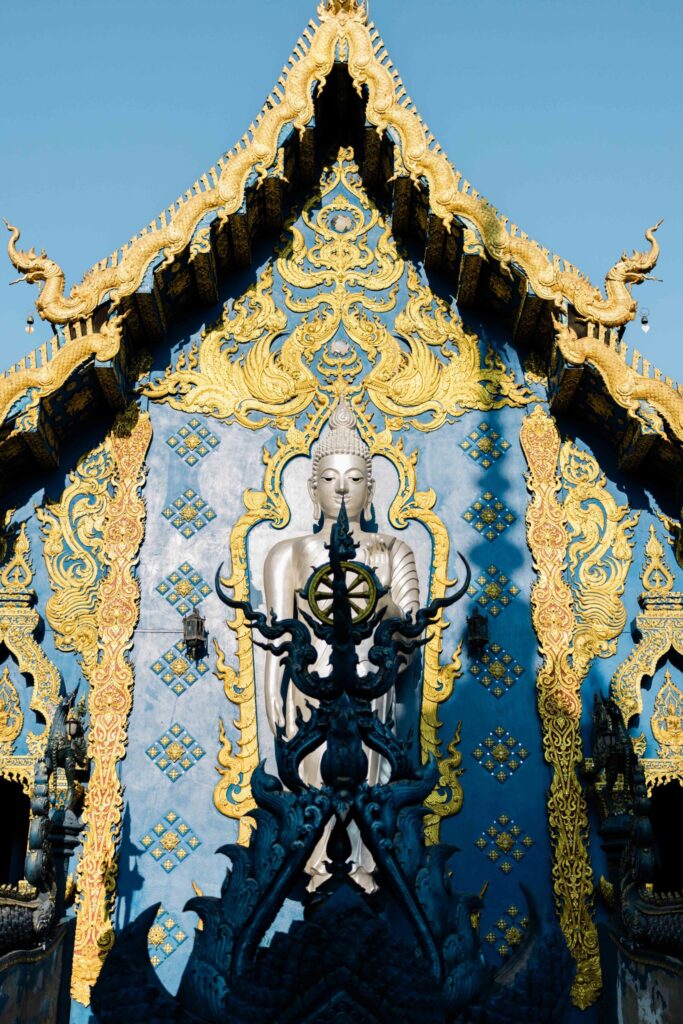
The Blue Temple, officially known as Wat Rong Suea Ten, is one of Chiang Rai’s most striking attractions. It’s not like any other temple you see around Thaland. Its vivid blue exterior, intricate gold details and elaborate interior make it stand out. Interestingly, the temple was designed by Phuttha Kabkaew, a local artist who studied under Chalermchai Kositpipat, the artist behind Chiang Rai’s most famous White Temple (Wat Rong Khun).
The entry to the Blue Temple is free. It is open from 7:00 AM to 8:00 PM, with late afternoon being ideal for softer light and photography, depending on the temperature, cloud cover and sun direction.
Explore Wat Huay Pla Kang
If you still have time, head to Wat Huay Pla Kang, another impressive religious complex featuring a towering white statue of Guan Yin and a large pagoda. 10-15 min car ride from Blue Temple. You might even spot the towering Guan Yin statue from the plane if landing at Chiang Rai Airport
Many people like to combine Lalitta Café with this, However, this was not for us, as it felt more of a touristic add on to add a cafe on to our itinerary just to take photos. However, that being it definitely is a beautiful spot and if it fits into yours you definitely can add on.
Dinner at Chiang Rai Night Bazaar
We spent the evening exploring the Chiang Rai Night Bazaar and its surrounding streets. Compared with Chiang Mai’s night markets, we found it noticeably quieter, making it a relaxed place to browse stalls, enjoy local food and soak up the atmosphere. There were also plenty of affordable food options, making it a great spot for a budget-friendly dinner.
If you’re still out exploring, you could stop by Chiang Rai’s Golden Clock Tower which is close by, if it’s on your list. Wasn’t on ours.
Travel tip: Chiang Rai Night Bazaar is right next to Bus Terminal 1. If you’re travelling to Chiang Mai the following day and prefer to buy your Green Bus ticket in person, you can stop by the ticket counter before it closes and get it sorted during your first evening in the city. Alternatively, you can book online in advance.
Day 2: White Temple and the Journey to Chiang Mai
Visit the White Temple (Wat Rong Khun)
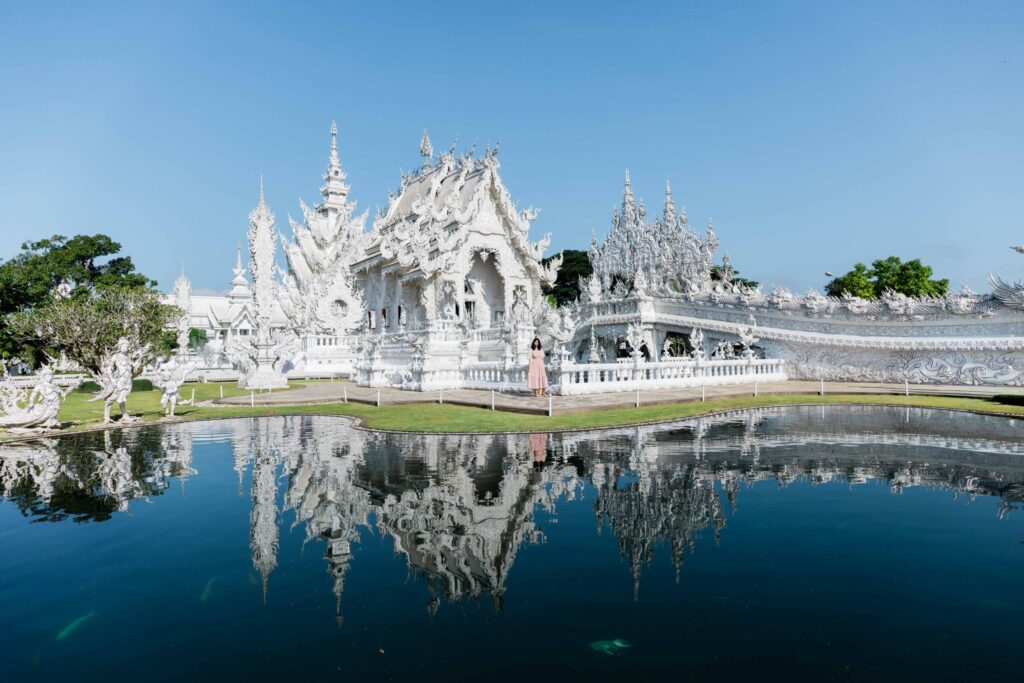
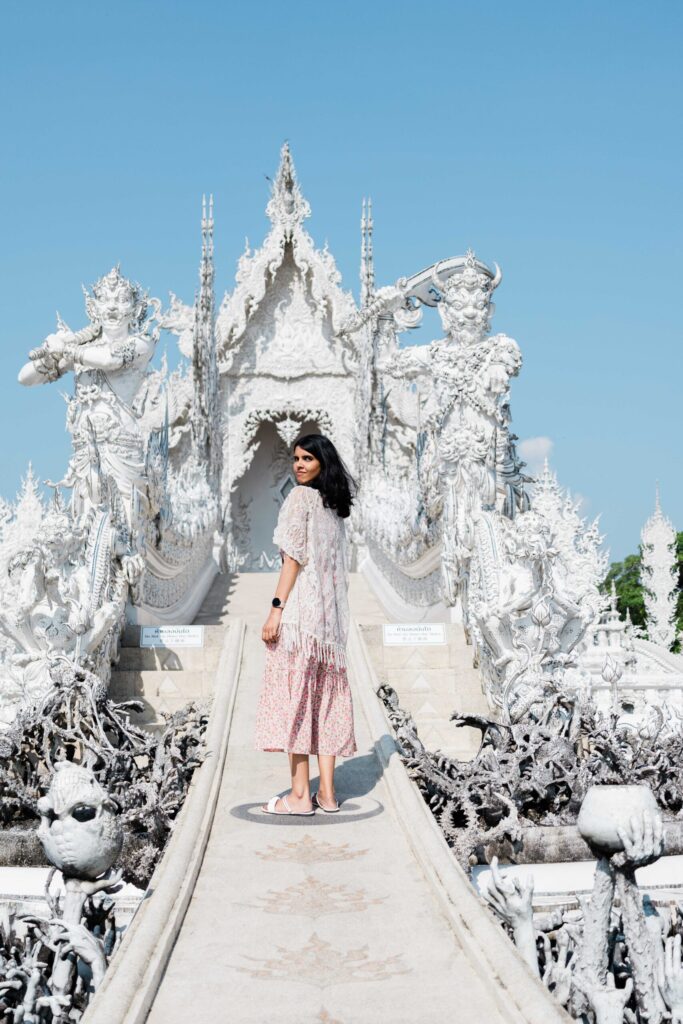
The White Temple is one of Chiang Rai’s most famous attractions and a highlight of any visit. Unlike a traditional temple, it is an elaborate contemporary art project created by Thai artist Chalermchai Kositpipat.
Its white exterior, mirrored details and intricate sculptures make it unlike almost anything else you’ll see in Thailand.
It opens at 8AM, so we recommend arriving as early as possible to avoid the biggest crowds and have a better chance of taking photos without too many people in the background. Allow around 2–3 hours to explore the complex at a comfortable pace.
For photography, morning light can help preserve the detail in the white architecture, although the best conditions depend on the sun & clouds!
Late morning – Optional stop at Baan Dam Museum
You can consider visiting Baan Dam Museum, also known as the Black House. This collection of dark buildings, artworks and unusual installations offers a striking contrast to the White Temple. Though we didn’t do this.
Lunch – Try khao soi
We stopped at a restaurant called Khao Soi, opposite Bus Terminal 1, for a bowl of khao soi, a rich, coconut-based curry noodle soup and a Northern Thai speciality. We tried it several times across Northern Thailand, but Chiang Rai had our favourite versions! You can try it at any restaurant that appeals to you, but don’t leave without tasting this local dish.
Before departure – Get a massage and catch the Green Bus
Before leaving for Chiang Mai, we found ‘Nice Massage’ offering traditional Thai Massages right next to Chiang Rai Bus Terminal 1. At the time of our visit, an hour-long massage cost us 250 baht, making it one of the cheapest rates compared to other cities, and yes it really is nice.
The Green Bus journey to Chiang Mai takes approximately 3.5–4.5 hours, depending on the service and road conditions. We took a bus around 3:30pm.
Travel tip: We booked our Green Bus tickets in person on arrival for the following day and found it cheaper than booking online. You can also book through the official Green Bus website/FairFair or for convivence 12Go. Booking a day ahead is advisable during busy periods, although same-day tickets may be available.
Best Things to Do in Chiang Rai
If you’re spending more than 1.5 days in Chiang Rai, there are plenty of other temples, cultural attractions, cafés and countryside escapes to add to your itinerary. You can choose from the below places and build your own itinerary accordingly.
Temples and Architecture
- White Temple (Wat Rong Khun): A contemporary white temple known for its intricate sculptures and mirrored details.
- Blue Temple (Wat Rong Suea Ten): A vivid blue temple decorated with elaborate artwork and gold accents.
- Wat Huay Pla Kang: A large religious complex featuring a towering Guan Yin statue and an impressive pagoda.
- Wat Phra Kaew: A historic temple associated with the discovery of the Emerald Buddha.
- Wat Phra That Doi Chom Thong: A hilltop temple with a long history and views over parts of the city.
- Wat Ming Mueang: A traditional temple worth visiting for its local religious architecture.
Museums and Cultural Attractions
- Baan Dam Museum (Black House): An unconventional collection of buildings and artworks created by Thai artist Thawan Duchanee.
- Oub Kham Museum: A museum showcasing Lanna and northern Thai cultural artefacts.
- Mae Fah Luang Art and Cultural Park: A cultural attraction with traditional Lanna architecture, gardens and exhibitions.
- Tham Luang–Khun Nam Nang Non Forest Park: Visit the area associated with the 2018 Tham Luang cave rescue, subject to access restrictions.
- Chiang Saen: Explore a historic town near the Mekong River with ancient ruins and temples.
Cafés, Markets and Local Food
- Lalitta Café: A landscaped café known for its fantasy-like garden setting and waterfall features.
- Chivit Thamma Da Café: A riverside café in a charming colonial-style house.
- Chiang Rai Night Bazaar: Browse food stalls, local products and evening entertainment.
- Chiang Rai Saturday Walking Street: A weekend market with street food, crafts and local vendors.
- Golden Clock Tower: A central landmark, especially after dark.
- Try northern Thai food: Look for khao soi and nam ngiao, a northern Thai noodle dish made with a rich tomato-based broth.
- Visit a tea or coffee plantation: Sample locally grown varieties and discover northern Thailand’s tea and coffee production.
Nature and Countryside
- Singha Park: A large countryside estate with green landscapes, agricultural areas and outdoor activities.
- Choui Fong Tea Plantation: A scenic tea plantation where you can enjoy views over the tea fields and sample tea-based drinks.
- Doi Mae Salong: A mountain village known for its tea-growing heritage and Chinese-influenced culture.
- Doi Tung and Mae Fah Luang Garden: Explore landscaped gardens and mountain attractions in northern Chiang Rai.
- Khun Korn Waterfall: A forest waterfall reached via a walking trail.
- Doi Chang: A mountain area known for coffee plantations, scenic viewpoints and cooler weather.
- Kok River: Enjoy riverside scenery and, where available, boat trips or other river activities.
Mountains and Outdoor Adventures
If you enjoy hiking and mountain scenery, consider spending extra time exploring Chiang Rai’s more remote northern landscapes.
- Phu Chi Fa: Famous for mountain viewpoints and a sea of mist, particularly during the cooler season.
- Doi Pha Tang: A mountain destination with panoramic views towards the Mekong region and Laos.
- Phu Chi Dao: A scenic mountain viewpoint popular for sunrise and misty landscapes.
- Local hiking trails: Explore forest walks and mountain routes, checking trail conditions, transport and seasonal access before setting out.
Day Trips and the Golden Triangle
- Golden Triangle: Visit the region where Thailand, Laos and Myanmar meet around the Mekong River.
- Hall of Opium: Learn about the history of opium production and the region’s relationship with the opium trade.
- Mae Sai: Explore the northern border town near Myanmar; check current border access arrangements before visiting.
- Ban Pha Mi: Visit a mountain community known for its scenery and cafés, while being respectful of local residents and customs.
- Northern hill communities: Learn about the region’s diverse cultures through responsible, community-based visits.
Some of these destinations are a considerable distance from Chiang Rai city. Check travel times before planning several stops in one day, and consider an overnight stay for more remote mountain destinations.
Practical Chiang Rai Travel Tips
How to Get Around Chiang Rai
Grab is convenient for getting around Chiang Rai city, particularly when travelling between temples and attractions that aren’t within easy walking distance. For remote destinations, you may need to arrange a private driver, join a tour or rent transport.
Where to Stay in Chiang Rai
Staying in or near the city centre makes it easier to visit the Night Bazaar, restaurants and central attractions. We stayed at Parawee Boutique Hotel, a budget-friendly option near the Blue Temple that was clean and served a lovely breakfast.
How to Get from Chiang Rai to Chiang Mai
The Green Bus is a practical option for travelling between Chiang Rai and Chiang Mai. We booked our tickets on arrival for the following day, and the journey took approximately 3.5–4 hours.
Check schedules and availability through the Green Bus website and its available booking channels. Booking ahead is recommended during busy travel periods. Always check your ticket for the correct departure terminal.
Is Chiang Rai Budget-Friendly?
We found Chiang Rai affordable compared with Bangkok and Chiang Mai. Budget accommodation, inexpensive local meals and reasonably priced massages make it a good destination for travellers looking to explore northern Thailand without spending too much.
How Long Should You Spend in Chiang Rai?
One and a half days is enough to see some of Chiang Rai’s main city attractions, particularly the Blue Temple, White Temple and Night Bazaar. However, if you want to explore the Black House, tea plantations, mountain viewpoints, waterfalls or the Golden Triangle, plan for at least 2–3 days, or longer if you want to take day trips at a relaxed pace.
Is Chiang Rai Worth Visiting?
We really enjoyed Chiang Rai as a quieter stop on our northern Thailand itinerary. Its distinctive temples, excellent local food and relaxed atmosphere made it a worthwhile addition to our trip before continuing to Chiang Mai. Very distinctive compared to other places in Thailand, and less touristy and more affordable. Had we travelled for longer or during winter, we’d loved to have stayed for at least 3 days.
So if you’re short on time, 1.5 days can work well for major highlights. If you have longer, the surrounding mountains, tea plantations and cultural attractions give you plenty of reasons to stay.